
Religious Education.

Our vision:
At Co-op Academy Nightingale, we deliver an RE curriculum which develops across school. Our curriculum follows the Discovery RE scheme which strives to make RE relevant and meaningful and adopts an enquiry-based approach to teaching and learning. This enquiry-based model enables children’s critical thinking skills to be developed alongside increasing their motivation to learn. We teach RE, following a four-step process of: engagement, investigation, evaluation and expression.
In our Religious Education, students develop knowledge and understanding of the principal religions represented in Great Britain and globally: Christianity, Islam, Hinduism, Sikhism, Buddhism, Judaism, including non-religious world views. Whole school assemblies are used to ensure children have a breadth of knowledge of religions and beliefs. We prioritise mindfulness and reflection skills and the civic value of 'Respect for a Diverse Society'.
At Nightingale, we want our children to investigate the beliefs and practises of religions and other world views. We want our children to investigate how religions and views address questions of meaning, purpose and value and how they influence morality, identity and diversity.
Our children gain knowledge and understanding of religious traditions and celebrations. We want them to build respect for different beliefs, values and traditions. We also want them to understand the influence of religions and beliefs on individuals, societies, communities and cultures.
British Values are taught through our RE lessons and the knowledge and understanding that is taught promotes tolerance and respect for others and their beliefs. Mindfulness is also woven in leading to children’s self-awareness and skills of reflection.
We seek to enrich our RE curriculum at Nightingale through trips to local places of worship and the use of real-life objects to enhance the teaching of different religions.
Lesson structure is important to us at Nightingale and we follow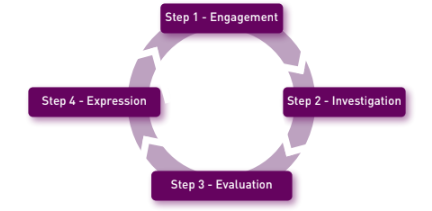 our Teaching and Learning handbook to teach the curriculum. We always include:
-
An introduction to the learning objective
-
High five
-
Introduction of key vocabulary
-
TLAC strategies to be utilised
Year 1
Term 1
What do Christians believe about God?
Term 2
What gifts might Christians in my town have given Jesus if he had been born here rather than in Bethlehem?
Term 3
Who is God to Muslims?
Term 4
Why was Jesus welcomed like a king or celebrity by the crowds on Palm Sunday?
Term 5
Who is God to Jews?
Term 6
Does visiting the Synagogue help Jewish children feel closer to God?
Year 2
Term 1
Is it possible to be kind to everyone all of the time?
Term 2
Why do Christians believe God gave Jesus to the world?
Term 3
How important is the Prophet Muhammed to Muslims?
Term 4
How important is it to Christians that Jesus came back to life after his Crucifixion?
Term 5
What do Humanists believe?
Term 6
What might Sanatanis learn from the story of Rama and Sita and the celebrations of Diwali?
Year 3
Term 1
Does praying at regular intervals help Muslims in their everyday lives?
Term 2
Has Christmas lost its true meaning?
Term 3
Could Jesus heal people? Were these miracles or is there some other explanation?
Term 4
What is ‘good’ about Good Friday?
Term 5
What is the best way for a Jew to lead a good life?
Term 6
Is it possible for everyone to be happy?
Year 4
Term 1
Does completing a pilgrimage make a person a better Muslim?
Term 2
What is the most significant part of the nativity story for Christians today?
Term 3
How do Jewish beliefs, teaching and stories impact on daily life?
Term 4
Is forgiveness always possible for Christians?
Term 5
Does visiting the Ganges make a person a better Sanatanis?
Term 6
Can the Buddha's teaching make the worold a better place?
Year 5
Term 1
What is the best way for a Muslim to show commitment to God?
Term 2
Is the Christmas story true?
Term 3
Are Rosh Hashanah and Yom Kippur important to Jewish children?
Term 4
How significant is it for Christians to believe God intended Jesus to die?
Term 5
What is the best way for a Buddhist to show commitments to their beliefs?
Term 6
What is the best way for a Christian to show commitment to God?
Term 1
How is the Quran vital to Muslims today?
Term 2
How significant is it that Mary was Jesus’ mother?
Term 3
Is anything ever eternal?
Term 4
Is Christianity still a strong religion 2000 years after Jesus was on Earth?
Term 5
What is the best way for a Jew to show their commitment to God?
Term 6
What is the best way for a Sanatanis to show commitment to God?